Sometimes the right tool does not just save a few hours. It saves thousands of euros.
That happened to me while working with handwritten archival documents written in old German script.
The Problem I Was Trying to Solve
I work with genealogy, researching family history through archival records. These documents include birth registries, military files, personal records, and other historical materials that are often handwritten and written in languages or formats that are rarely used today.
I speak Polish fluently, but old German documents from the Austro-Hungarian period are an entirely different challenge. The handwriting style, outdated abbreviations, and historical vocabulary make them extremely difficult to read, even for native speakers.
In my case, I was dealing with a personal archive file containing dozens of pages. I did not need a general summary. I needed an accurate transcription.
What the Traditional Approach Would Have Cost
At first, I contacted translators, but most of them declined immediately because handwritten historical German requires very specialized expertise.
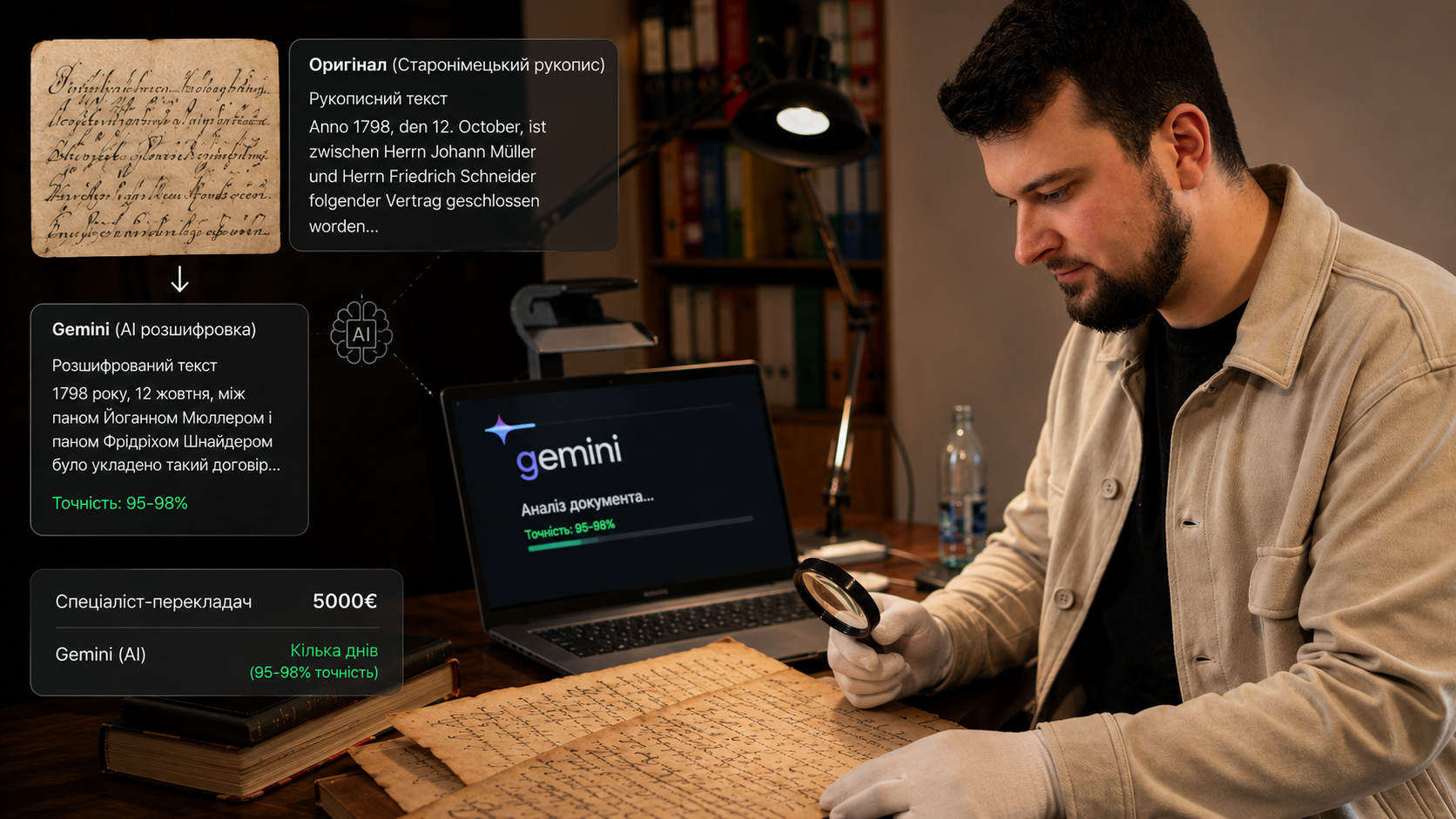
Eventually, I found professionals who work specifically with archival documents. Their pricing was around €50 per page.
After a quick calculation, it became obvious that a full transcription would cost well over €5,000. For a private research project, that was difficult to justify.
The AI Tools I Tested
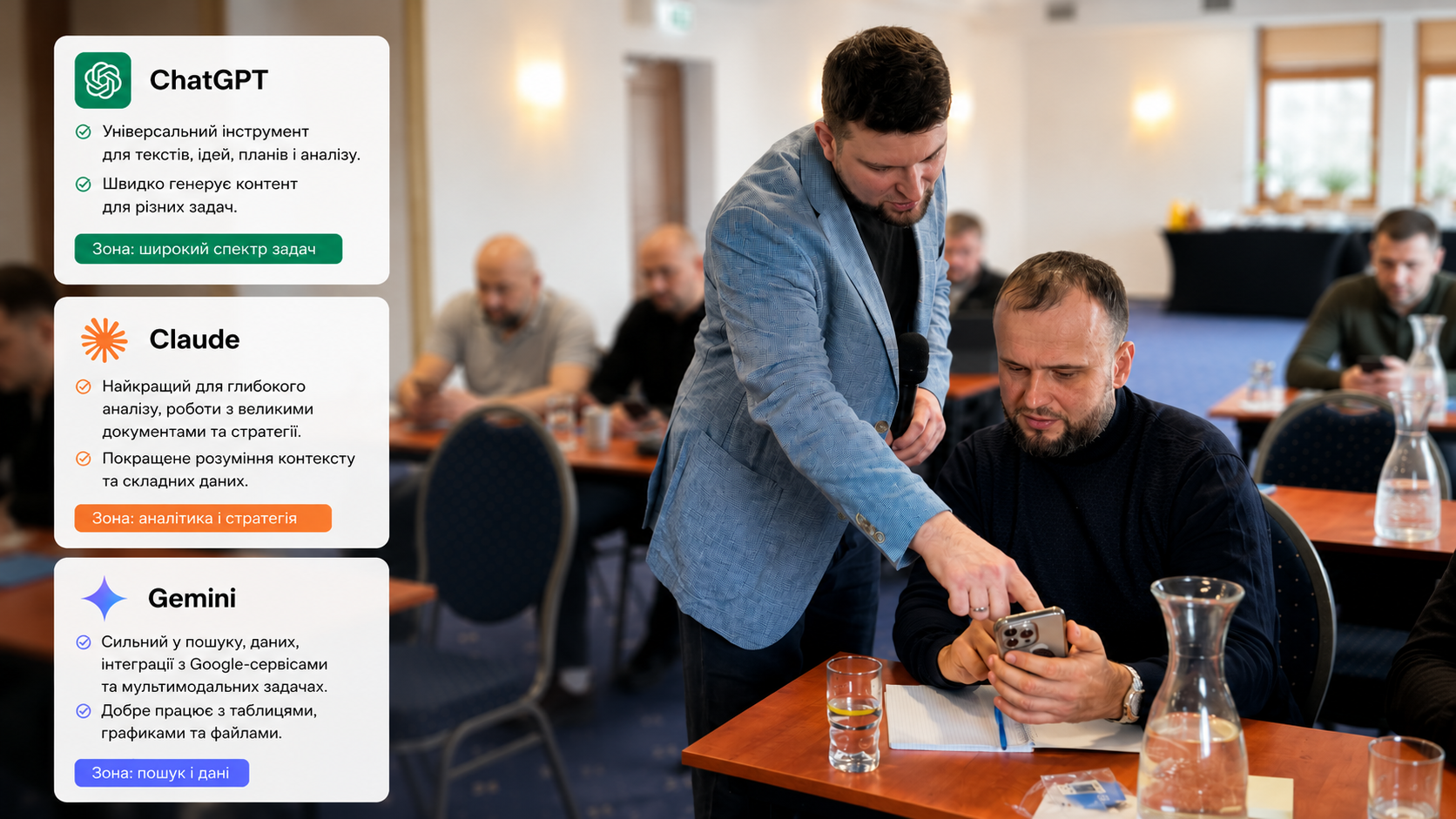
I started with ChatGPT, but the results were not reliable enough for this type of work. The model occasionally tried to guess unclear words instead of acknowledging uncertainty.
Claude performed better for long-form text analysis, but handwritten OCR and complex document recognition are not really its strongest area.
The best results came from Gemini.
Why Gemini Worked Better
Gemini was designed as a multimodal system from the beginning, which means it processes both text and visual information particularly well.
That matters a lot when working with historical documents, because the challenge is not only reading text. It is interpreting difficult handwriting, faded scans, irregular spacing, and inconsistent formatting.
In practice, Gemini managed to transcribe most pages with surprisingly high accuracy. More importantly, when certain words were unreadable, it usually marked them as uncertain instead of inventing replacements.
That alone made the output significantly more trustworthy.
How I Configured Gemini for Better Accuracy
What improved the results most was not some advanced technical setup, but a few simple rules.
At the beginning of every session, I explicitly assigned the role of an archival handwriting expert. I also instructed the model never to guess unreadable words and to mark uncertain fragments clearly instead.
Another important detail was opening a separate chat for each page rather than processing the entire archive inside one long conversation.
Those small adjustments reduced mistakes dramatically.
The Final Result
Within a few days, I had transcribed dozens of pages of handwritten old German records.
What would traditionally have cost more than €5,000 ended up costing little more than a subscription fee and my own time.
But the most valuable part of this experience was not even the money saved. It was realizing how much difference the right AI tool selection can make.
Where This Matters Beyond Genealogy
This approach is useful far beyond historical research.
Many businesses still deal with:
- • scanned archives;
- • handwritten notes;
- • low-quality documents;
- • historical records;
- • inconsistent data formats.
In those situations, AI can significantly reduce both cost and processing time.
Final Thoughts
AI does not always replace human expertise completely. But very often, it makes tasks economically possible that previously were not realistic at all.
In my case, choosing the right tool allowed me to complete in days what would traditionally have cost thousands of euros.
And that is one of the most practical advantages of AI for business: it can automate highly time-consuming work that previously required expensive specialists or large operational budgets.
FAQ
Which AI tool works best for handwritten document transcription?
For tasks that rely heavily on image interpretation and difficult handwriting recognition, Gemini often performs extremely well.
How can you reduce transcription errors?
Clear role instructions, explicitly forbidding the model from guessing unclear words, and using separate chats for individual pages all improve accuracy significantly.
Can AI fully replace a specialist?
For many practical tasks, AI is already accurate enough. For academic, legal, or highly sensitive materials, expert review is still recommended.
Where else can this approach be useful?
Any workflow involving document recognition, digitization, or analysis of difficult source materials can benefit from it.
If your business relies on large volumes of documents or manual information processing, we can help identify which workflows are worth automating with AI and where the biggest operational savings are likely to come from.
You can discuss this during a Discovery Call.
Stanislav Buchatskyi — Founder of Latwo.